
Bucharest and Wallachia · Sinaia
Sinaia and Peleș Castle
A mountain town grew around a 17th-century monastery and a king's summer castle. Above it, cable cars and paths reach the high Bucegi plateau, with its rock shapes and wide views.
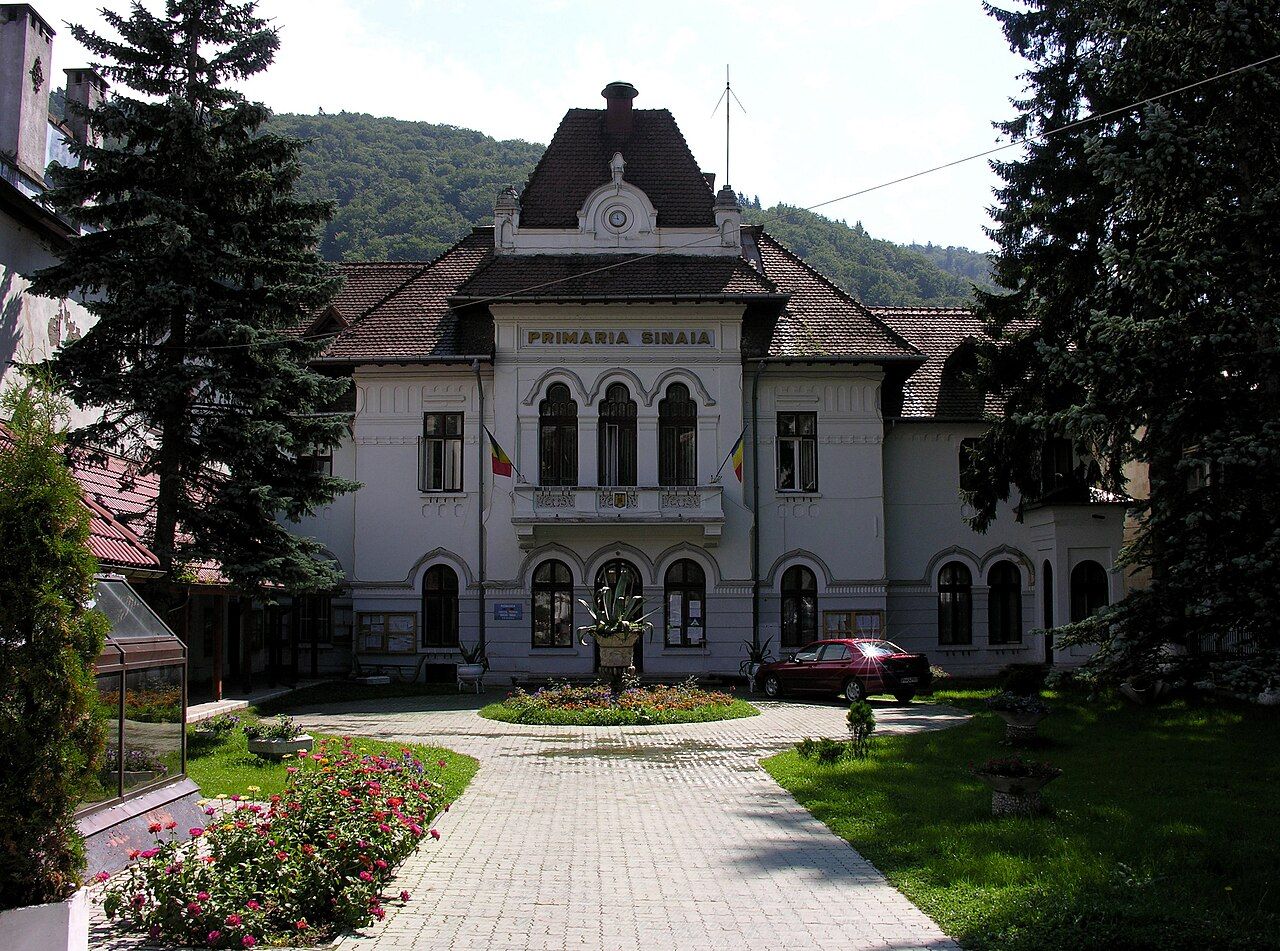
Sinaia sits in the Prahova valley, where the road and railway from Bucharest climb into the Carpathians on their way to Brașov. Fir forest covers the slopes, the Bucegi Mountains rise as a steep wall to the west, and the town itself is spread over terraces with villas, parks and stairways. It owes its name to a monastery and its fame to a king, who chose the valley for his summer home in the 1870s.
The monastery that named the town
Sinaia Monastery was founded at the end of the 17th century by Mihai Cantacuzino, a Wallachian nobleman who had made a pilgrimage to St Catherine's Monastery on Mount Sinai and named his new foundation after it. The town that later grew below took the same name.
The monastery has two churches. The small old church, from the founding years, has a painted porch and dark interior frescoes. The larger great church was built in the 19th century and painted in a later style. The old courtyard, with its low buildings and gate, is the calmer part. This is a working monastery: dress modestly, with shoulders and knees covered, keep your voice down, women may be asked to cover their hair, and follow the signs about photography inside the churches.
Peleș Castle
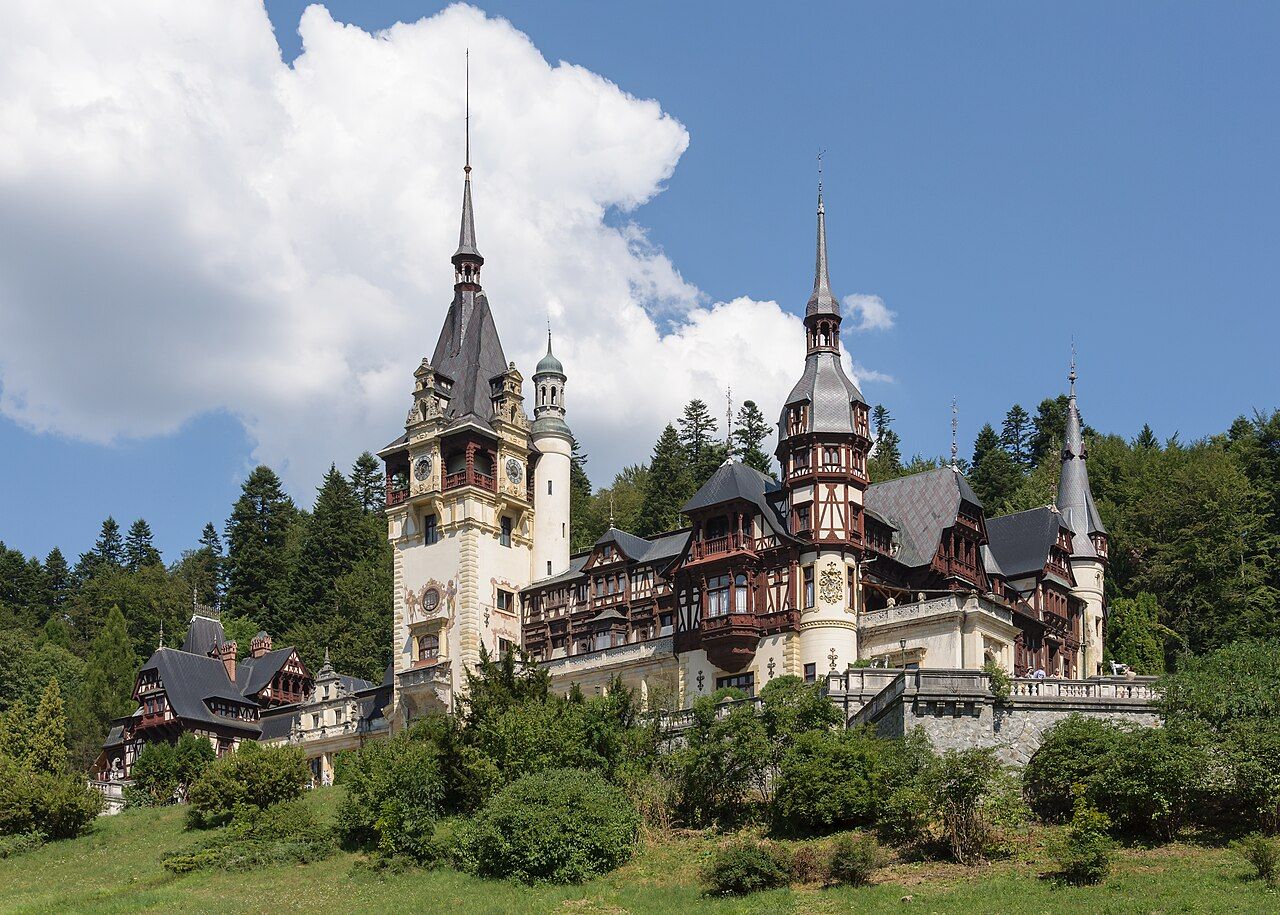
A short walk uphill through the forest from the monastery brings you to Peleș Castle. It was built for Carol I, the German prince who became Romania's first king, as a summer residence. Work began in 1873, and the castle was inaugurated ten years later, though it was extended and finished only in the early 20th century.
From outside it looks like a German Renaissance hunting palace, with half-timbered upper floors, turrets and a tall central tower, set on terraces with statues and fountains. Inside, room follows room in different styles: carved wood, armour, a Moorish salon, a Florentine hall, a theatre and a library. It was modern for its time, with central heating, a lift and electric light from its own power plant. The castle is now a museum, visited by guided tour or on set routes, and it is very busy at weekends and in summer. Check opening days, ticket types and photo rules before you go, because they change.
Next to it, the smaller Pelișor was built for the heirs to the throne, Ferdinand and Marie, and has Art Nouveau rooms that reflect Queen Marie's taste. Nearby is also the Foișor hunting lodge, which is not open to visitors.
Further along the arcBucharest, between the boulevardsThe town
Sinaia became a fashionable resort once the court came for the summer. Villas went up along the slopes, a casino and hotels were built near the park, and the railway brought visitors from Bucharest. Much of that era survives, and a walk through the central park and up the stairways to the villa streets shows it well.
Musicians came too. George Enescu, Romania's best-known composer, built a villa called Luminiș on the slopes above the town in the 1920s and spent long periods there; it is now a memorial house, and concerts are sometimes held in it. Many of the old villas along the slopes are still private homes, so look at them from the street. Sinaia is a place to walk slowly, look at the villas and their wooden verandas, and stop in the parks, rather than one with a long list of sights.
The town is busy at weekends all year. In winter it is a ski resort, with runs on the slopes of the Bucegi above. In summer it is a base for walkers and for families escaping the heat of the plain. Traffic on the main road through the Prahova valley can be very heavy on Fridays and Sundays, and the train is often the easier way in.
Up to the Bucegi plateau
Above Sinaia, the Bucegi Mountains end in a high, rolling plateau at around 2,000 metres, with steep cliffs on its eastern edge facing the valley. Cable cars climb from the town towards the plateau in stages, and marked paths go up through the forest for those on foot.
On the plateau, the best-known sights are rock formations shaped by wind and weather, among them the Babele and the Sphinx, and the Heroes' Cross on the Caraiman peak, built in the 1920s to honour the dead of the First World War. Omu Peak, at the northern end, is the highest point of the range. Paths cross wide meadows of grass and dwarf pine, and the weather can turn quickly, so carry layers and keep an eye on the cloud.
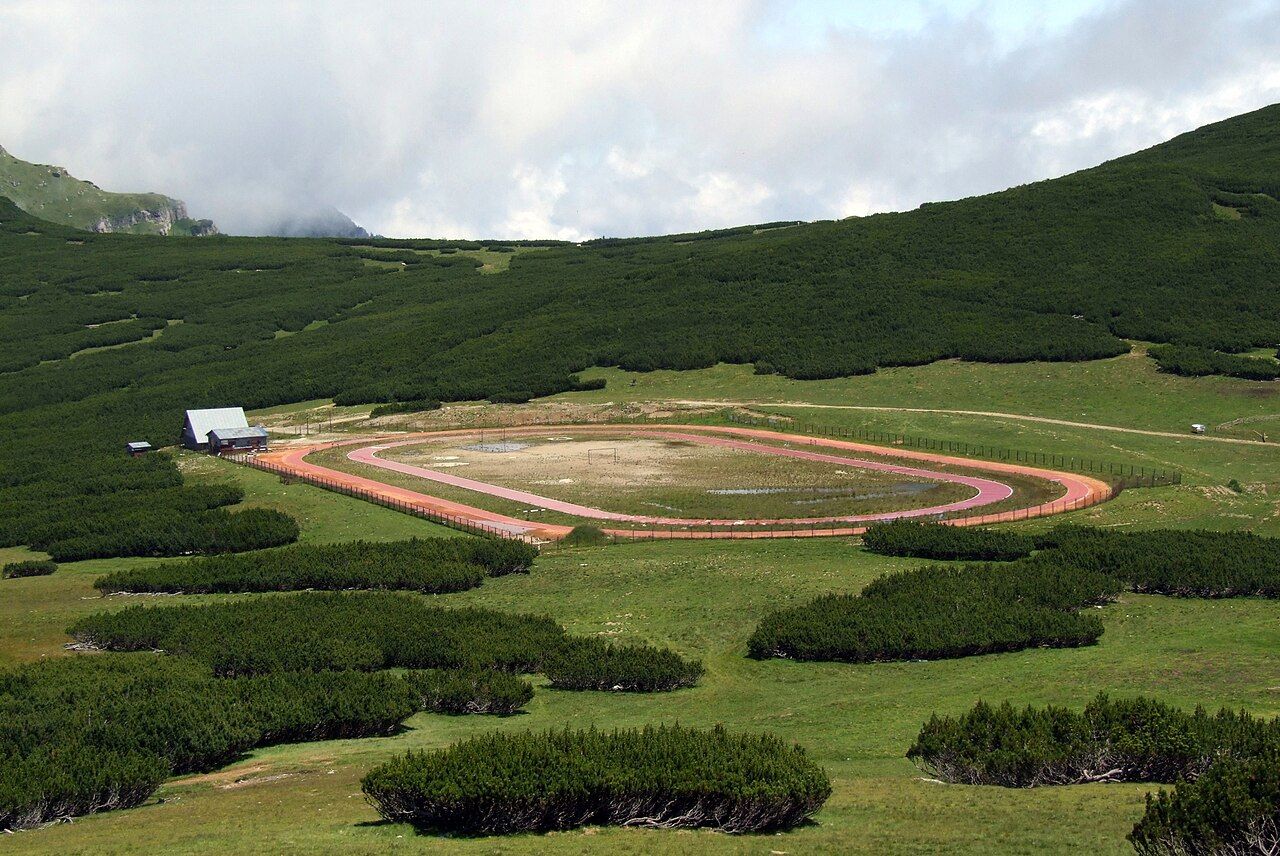
The plateau also holds a high-altitude sports training base, with an athletics track laid out among the dwarf pines, an odd sight above the clouds. Brown bears live in the forests around Sinaia and sometimes come into town at night, drawn by rubbish bins. Never feed them, keep your distance, and follow local warnings.
Making a trip of it
Sinaia works as a long day from Bucharest or as a stop on the way to Brașov, which is about an hour further north. Spending a night lets you see Peleș early, before the coaches, and gives you a full day for the mountains. From Brașov you can go on to the castle at Bran, which is easy to combine with a day here. Spring and autumn are calmer than high summer, and the castle under snow has its own appeal.
The photographs on this page are credited, with their licences, on threads and photographers.