
Transylvania · Bran
Bran Castle and the Râșnov citadel
A customs castle on a mountain pass that a novel's fame turned into Dracula's home, a queen who made it hers, and a villagers' fortress on the hill next door.
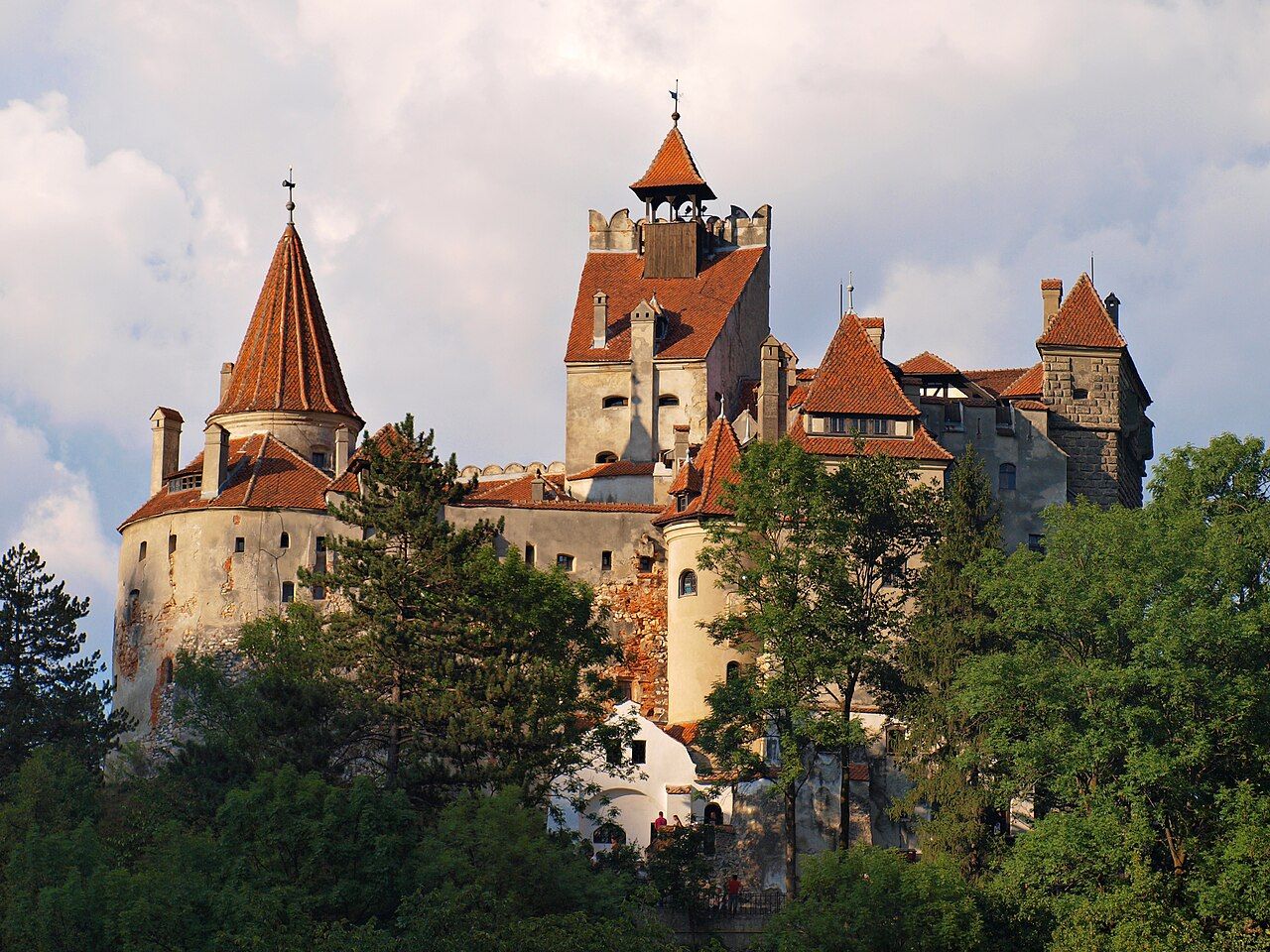
Bran Castle stands on a rock at the head of a pass between the Piatra Craiului and Bucegi mountains, on the old road from Transylvania into Wallachia. The Saxons of Brașov built it in the late 14th century, after the Hungarian king granted them the right to do so in 1377, and for centuries it served as a fortress and a customs post, watching the traffic of goods and people over the mountains. Its towers, roofs and white walls rising out of the trees make it one of the most photographed buildings in Romania.
It is also the most misunderstood. Most visitors come because of Dracula, and the link is far thinner than the souvenir stalls suggest. The castle has a real history of its own, and a short drive away the citadel at Râșnov tells another, quieter story about how ordinary villagers survived the raids of the past.
What Bran has to do with Dracula
Very little. Vlad III Dracula was a real prince of Wallachia in the 15th century, remembered in Romania as Vlad Țepeș, Vlad the Impaler, for his cruelty to enemies and his wars against the Ottomans. He knew this border well and may have passed along the Bran road, but there is no good evidence that he ever lived in the castle or held it. His own fortress was Poenari, on a crag above the Argeș valley on the south side of the Transfăgărășan.
Bram Stoker, the Irish author of the novel Dracula, published in 1897, never visited Romania. He built his Count and his castle from books, and he placed Castle Dracula near the Borgo Pass in the north-east of Transylvania, far from Bran. The connection with Bran came much later, through tourism, because a castle on a rock in Transylvania looks the part. Enjoy the legend for what it is, but know that you are visiting a Saxon customs fortress and a royal home.
Queen Marie's castle
In 1920 the town of Brașov gave the castle to Queen Marie of Romania, the British-born queen who had become popular during the First World War and the union of Transylvania with Romania in 1918. She restored it as a summer residence, with whitewashed rooms, wooden furniture, tiled stoves and a garden at the foot of the rock, and it became one of her favourite homes. After her death it passed to her daughter, Princess Ileana. The communist state took the castle in 1948 and opened it as a museum, and in the 2000s it was returned to Ileana's descendants, who still own it and keep it open to visitors.
The rooms you walk through today reflect Marie's taste far more than any medieval prince's. Narrow stairs, low doors and small courtyards connect them, and the views from the windows over the pass explain why the site was chosen in the first place.
Visiting Bran
Bran is busy. On summer weekends and holidays the queue to enter can be long, and inside the castle the narrow rooms and stairs fill up quickly, so you move with the crowd. Arrive early in the day, come on a weekday, or visit in spring or autumn, when the hills are just as green or turning and the lines are shorter. Opening hours and entry fees change, so check them before you go.
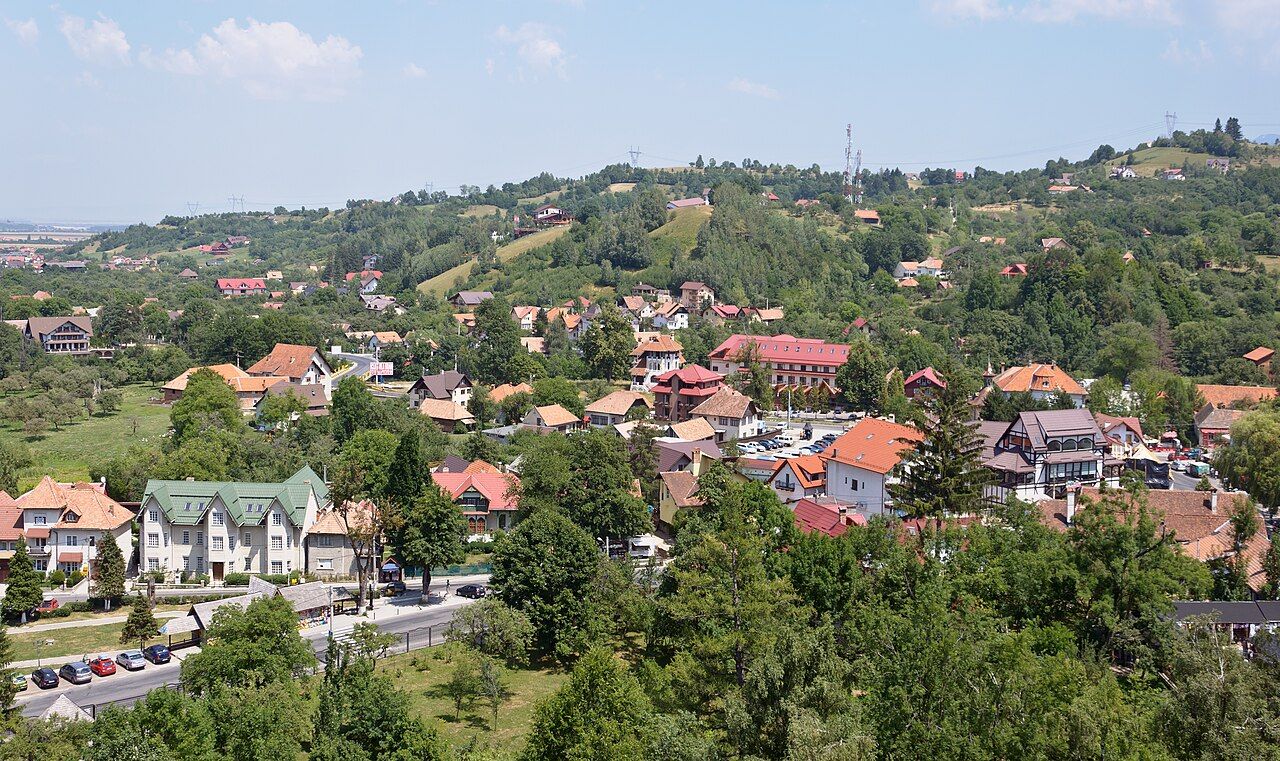
Below the castle, a market of stalls sells woollens, cheeses, carvings and Dracula souvenirs. The village of Bran itself spreads across the hills, with farmsteads and guesthouses scattered among meadows, and the valleys towards Moieciu and Fundata are good for walking. This is bear country: never feed bears, keep your distance and follow local warnings, especially near forest edges and rubbish bins.
The Râșnov citadel
Râșnov lies on the road between Bran and Brașov, and its citadel crowns a limestone hill above the small town. It was not a lord's castle but a peasant fortress, probably begun in the 13th century and enlarged later, where the people of Râșnov and nearby villages could take shelter with their families and animals when raiders came through the passes. Inside the walls they built houses, storerooms, a chapel and a school, and some families stayed for long periods during sieges.
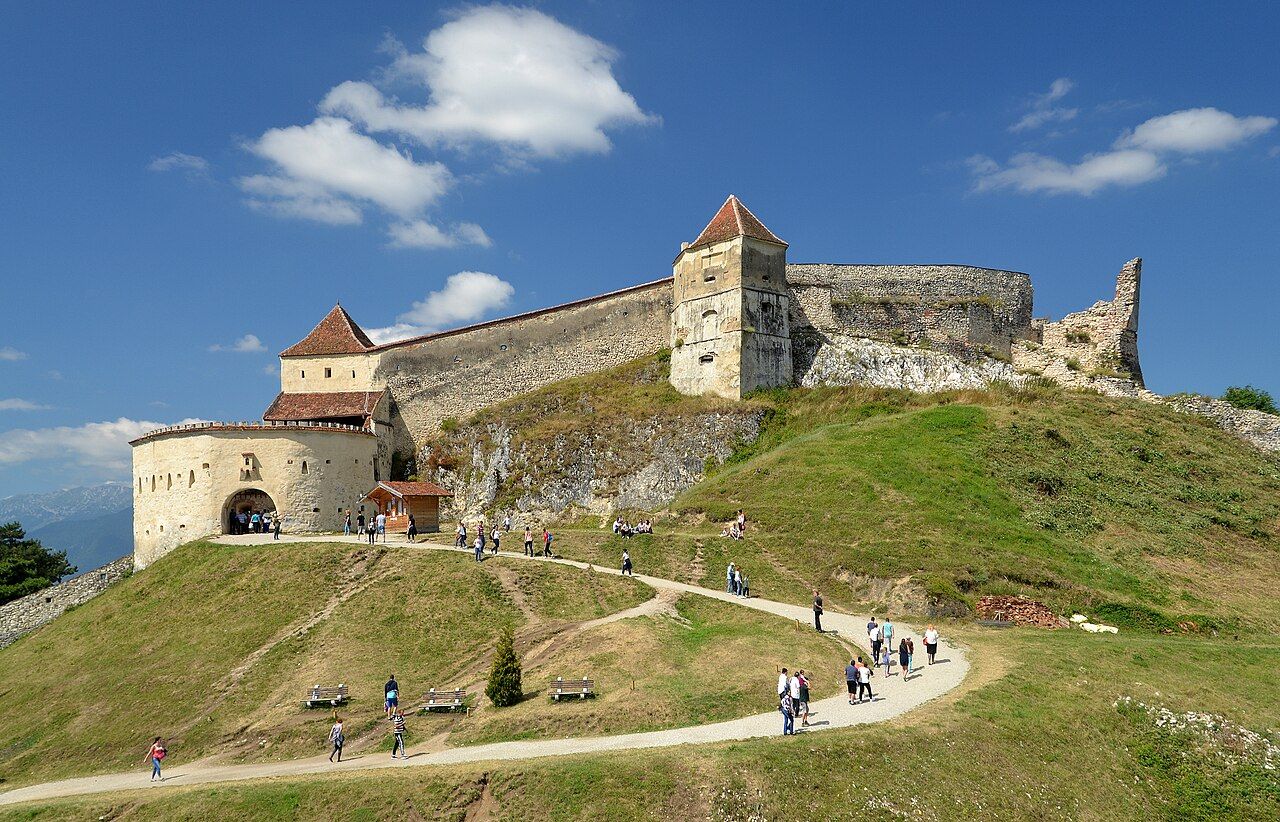
The citadel's greatest problem was water, and a deep well was dug through the rock inside the walls. A local story says that two prisoners dug it over many years in return for their freedom; it is a good tale, and you can believe as much of it as you like. Parts of the citadel have been heavily restored, and some rooms hold small exhibitions. A steep path climbs to the gate from the town, and the walls give wide views over the Bârsa plain and the mountains. A row of large letters spelling the town's name stands on the hillside.
Planning the day
Bran and Râșnov fit easily into one day from Brașov, with time to walk in either place, and buses run along the road between them. Check current times before you rely on them; there is more in getting around. If you have more time, the Piatra Craiului National Park, reached from Zărnești, has some of the best ridge walking in the country, on marked trails that need proper boots and a weather check.
The photographs on this page are credited, with their licences, on threads and photographers.