
Maramureș and Bucovina · Bucovina
The painted monasteries of Bucovina
In the hills of northern Moldavia, 16th-century churches wear their frescoes on the outside: Last Judgements, ladders to heaven and sieges, painted for people who could not read.
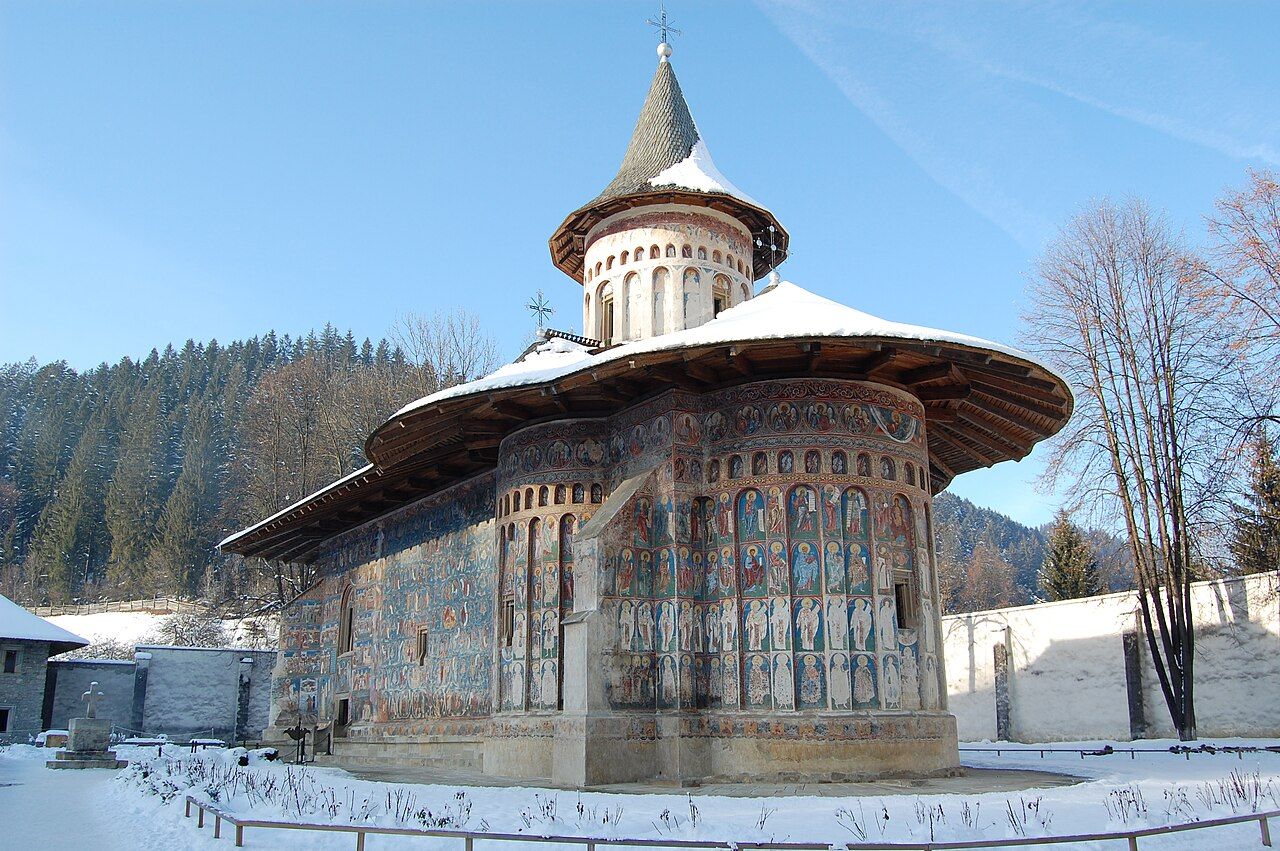
Bucovina is the northern part of the historic region of Moldavia, now split between Romania and Ukraine. On the Romanian side, in a land of rounded wooded hills called the obcine, stand a group of churches whose outer walls were painted from top to bottom in the 16th century. They have survived nearly five hundred years of sun, snow and wind, and they are among the most remarkable buildings in Europe.
Several of them are on the UNESCO World Heritage list as the Churches of Moldavia. They are spread across a few valleys around Suceava, Gura Humorului and Câmpulung Moldovenesc, and you can see the main ones in two or three unhurried days.
Why the walls were painted
Most of the churches were built under Ștefan cel Mare, Stephen the Great, prince of Moldavia from 1457 to 1504, and his son Petru Rareș, who ruled in the first half of the 16th century. Stephen fought the Ottomans for much of his reign and built churches after his battles. Under Petru Rareș, the fashion arose of painting the outside walls as well as the inside.
The paintings were a book for people who could not read. Crowds at feast days were often too large for the small churches, and those standing outside could follow the stories on the walls: the lives of the saints, the hymns to the Virgin, the Tree of Jesse showing the ancestors of Christ, and on the west walls the Last Judgement. The images also carried messages of their time, with the enemies of the faith shown in Ottoman dress.
The colours came from local minerals and plants, and the deep overhanging roofs protected them. Walls facing north, exposed to the worst weather, have often lost most of their paint. Those facing south and west are often still bright.
Voroneț
Voroneț, near Gura Humorului, was founded by Stephen the Great in 1488, reportedly in just a few months. The exterior painting was added in 1547. Its west wall carries a Last Judgement that fills the whole surface: Christ in judgement at the top, the saved and the damned below, a river of fire, and the dead rising from their graves, some of them handing back bodies swallowed by animals.
The colours came from local minerals and plants, and the deep overhanging roofs protected them.
Voroneț is best known for its blue, a deep, bright colour that has become known as Voroneț blue. Its exact recipe is still discussed, and it is at its strongest in late afternoon light. A community of nuns lives here.
Humor, Moldovița and Arbore
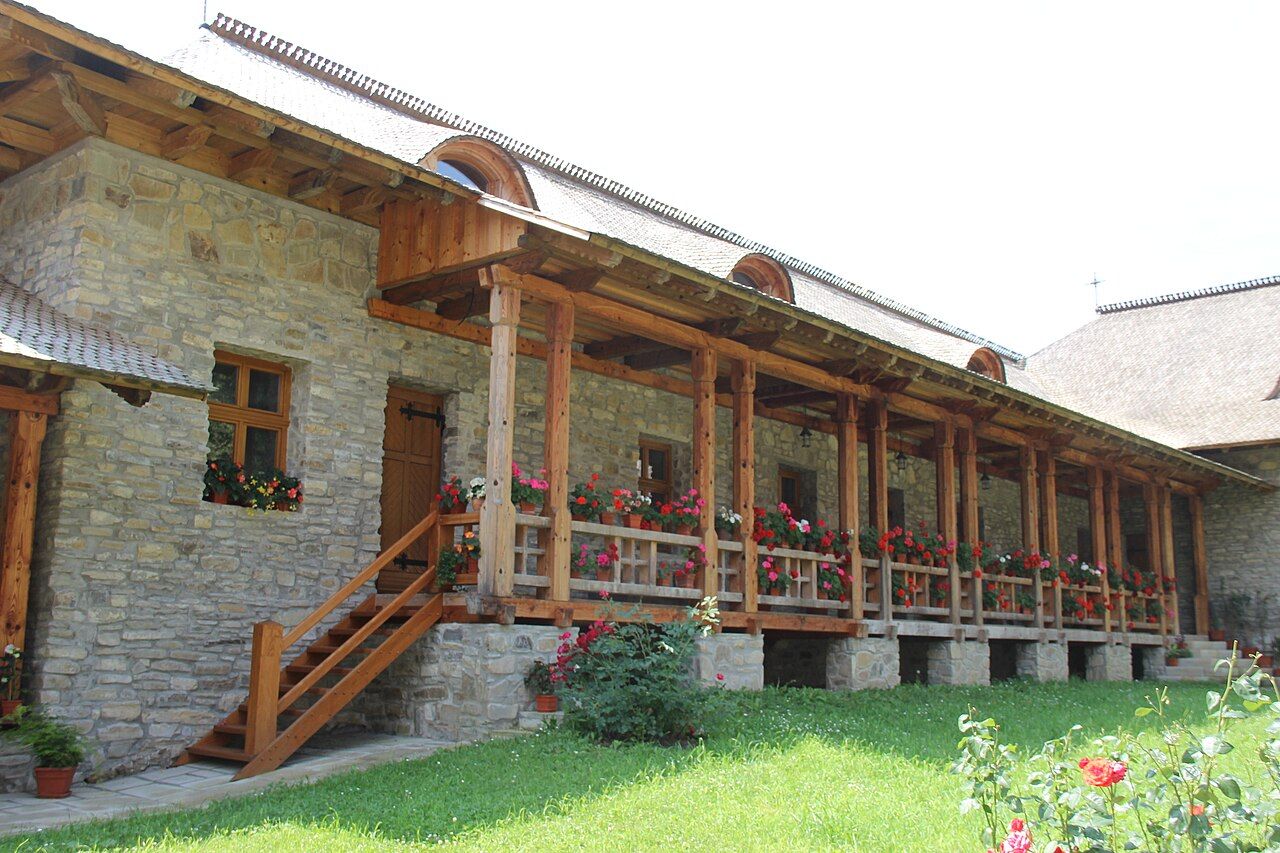
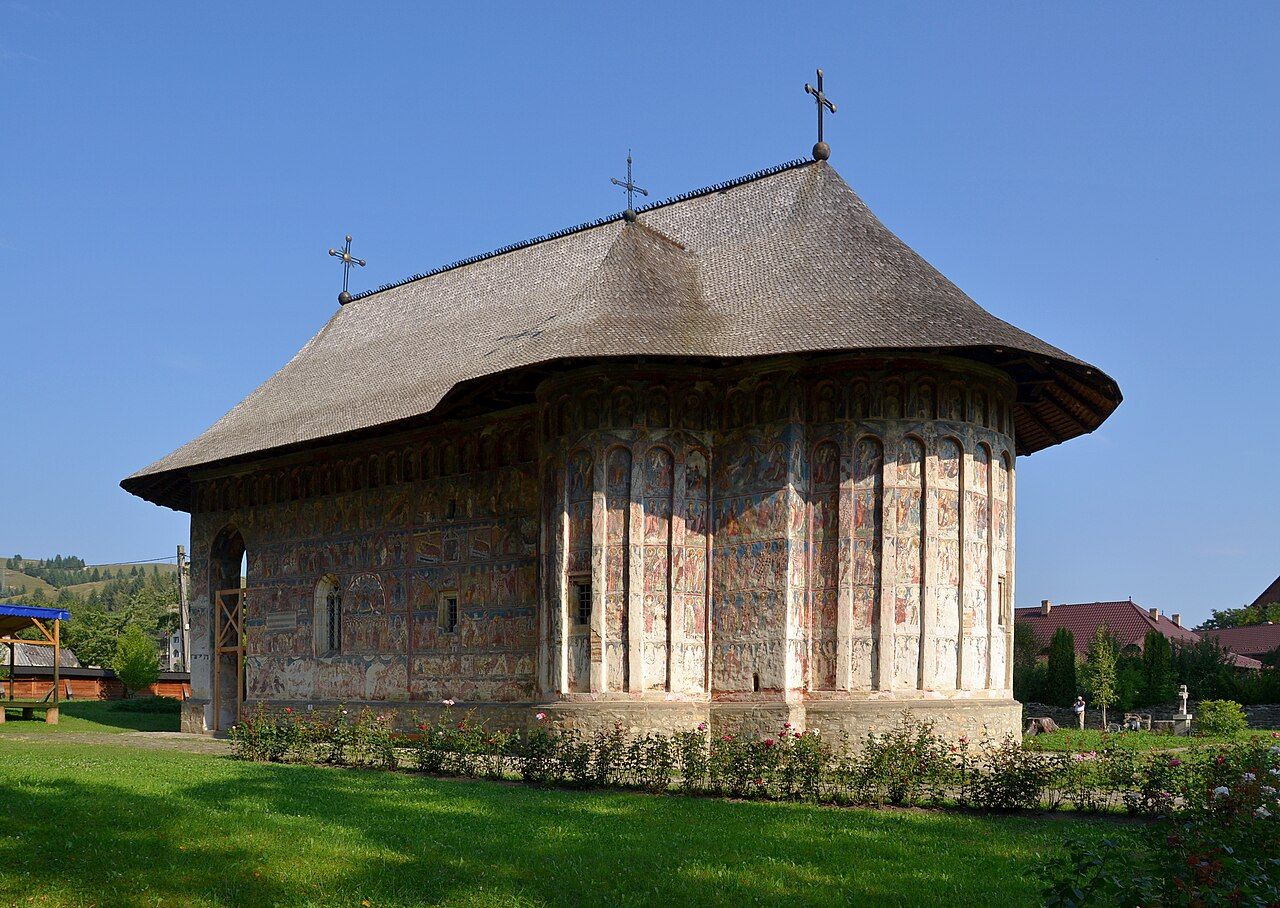
Humor, a few kilometres north of Gura Humorului, was built in 1530 and painted soon after, with a warm red-brown tone dominating. It has an open porch, unusual among these churches, and one of the clearest scenes of the siege of Constantinople, a subject painted to encourage resistance to the Ottomans. Unlike most of the others, it has no tower over the church.
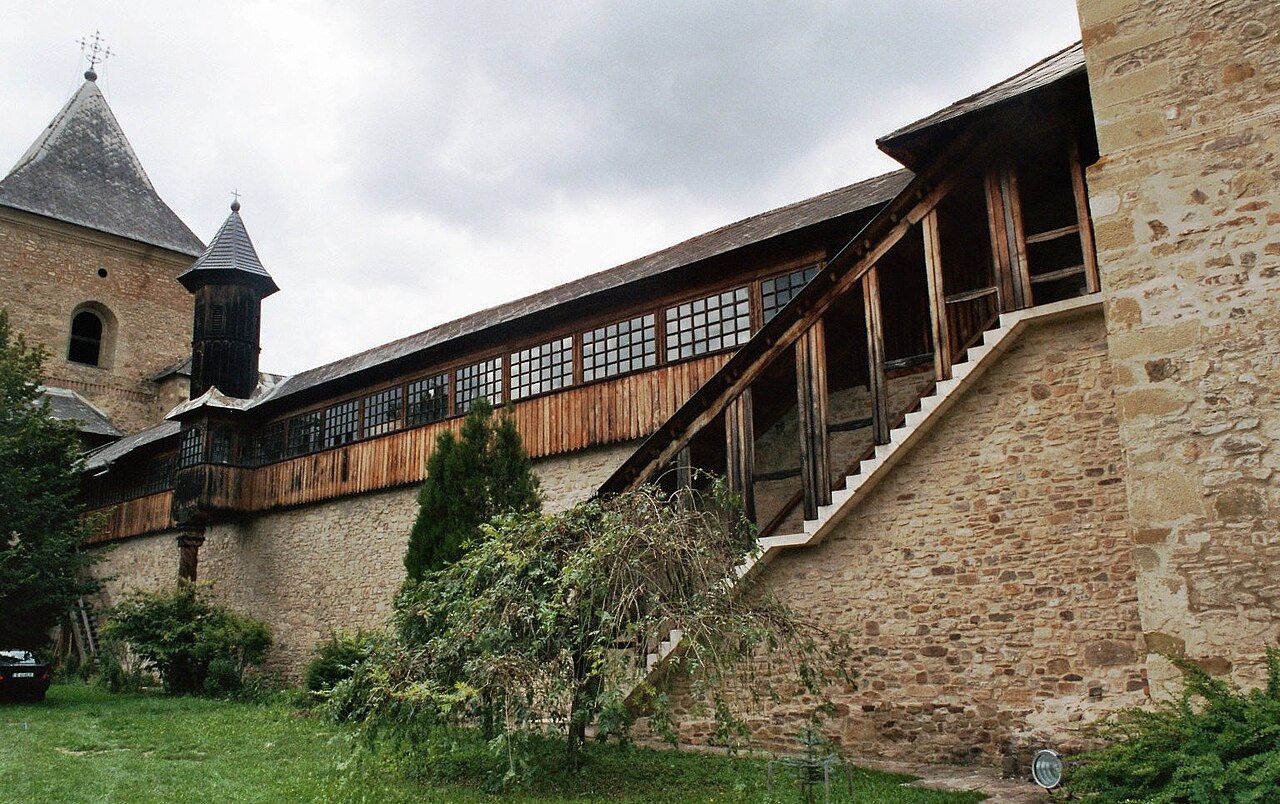
Moldovița, in the valley of the same name to the north-west, was founded by Petru Rareș in 1532 and painted in 1537. Its yellow and gold tones are strong, and its siege of Constantinople is famous. The monastery is enclosed by stone walls, and inside them stands a stone house with a tower that once served as the princely residence.
Arbore, in a village to the east, is a smaller church built in 1503 by a nobleman, Luca Arbore, not by a prince. It has no monastery around it, and its paintings, with their greens, have faded on many walls, but the west wall is still rich in detail.
Further along the arcThe wooden churches of Maramureș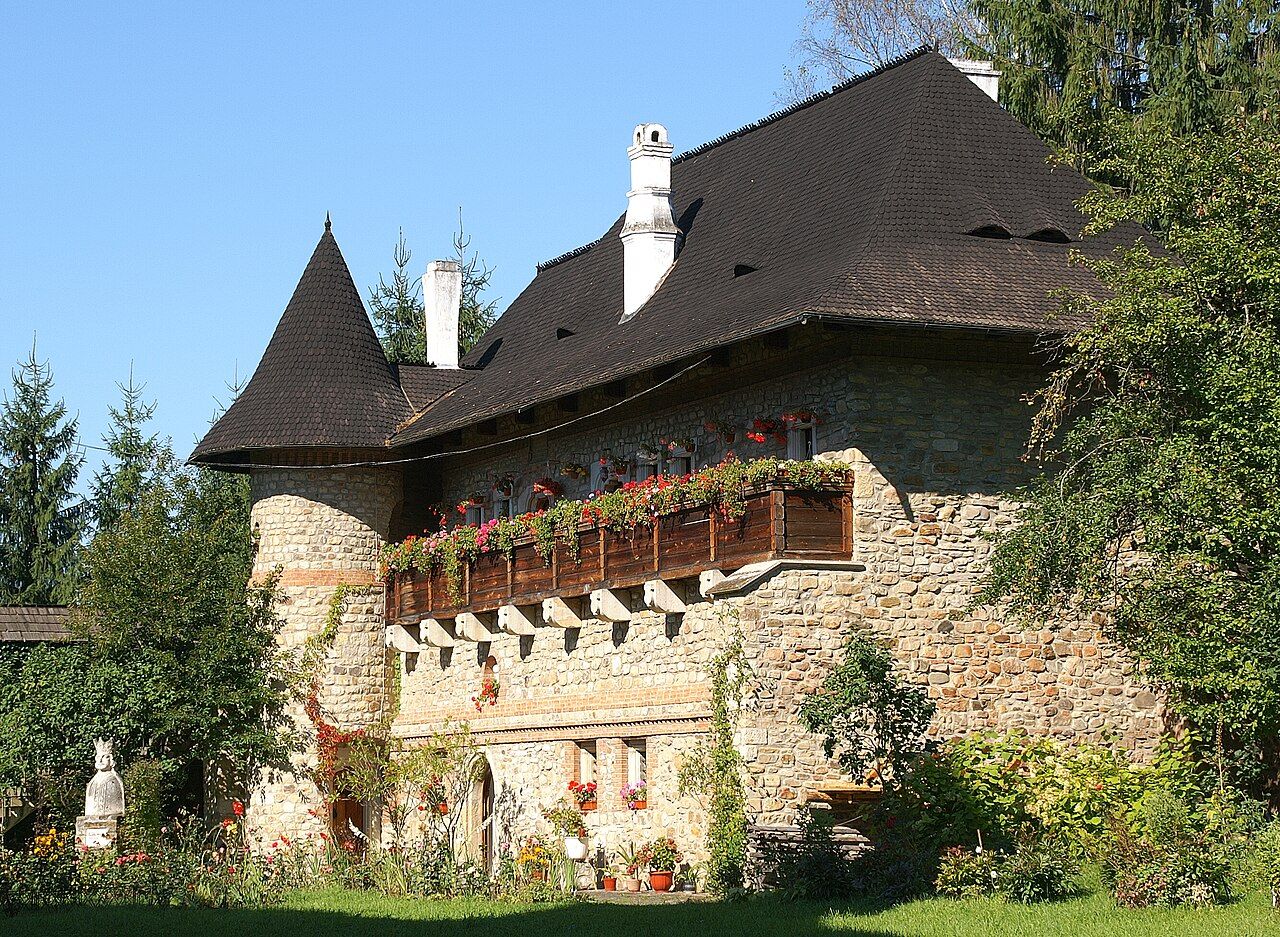
Sucevița
Sucevița is the last and largest of the painted monasteries, founded by the Movilă family at the end of the 16th century. Its church stands in a square of high stone walls with towers at the corners, like a fortress. Here the north wall is the famous one: it carries the Ladder of Virtues, a huge image of monks climbing a ladder to heaven, with angels helping them on the right and demons pulling the sinners down on the left. Green dominates the palette.
The road from Moldovița to Sucevița crosses a pass over the obcine, with wide views over the forested hills, and is a pleasant drive in itself.
North of Sucevița, Putna Monastery is not painted on the outside, but it matters more to many Romanians than any of the others. Stephen the Great founded it in 1466, and he is buried in its church; his grave is a place of pilgrimage. Back towards Suceava, the old princely fortress of the Moldavian capital stands on a hill above the town, and the churches of Pătrăuți, Probota and St John the New in Suceava are also on the UNESCO list. Easter is a special time in the region, when eggs are dyed and painted with fine patterns in the villages, and the monasteries fill for the services.
Visiting with care
These are working monasteries, home to communities of nuns or monks, not open-air museums. Dress modestly: covered shoulders, no shorts, and skirts below the knee for women. Some monasteries lend wraps at the gate, but do not count on it, and women may be asked to cover their hair. Speak quietly in the courtyards and inside the churches.
Photography of the outer walls is usually allowed, sometimes for a small fee, but inside the churches it is often forbidden. Follow the signs and ask if unsure. Do not photograph the nuns or monks without permission. If a service is in progress, step back or join it quietly. Many monasteries close their gates in the evening; check before you go late.
Getting there and staying
Suceava, with its medieval fortress, is the main town and has an airport and train links. Gura Humorului is the most convenient base for Voroneț and Humor, and Câmpulung Moldovenesc for Moldovița and Sucevița. A car is the easiest way to link the monasteries, as buses between them are few. Late spring and early autumn are the best times, with green hills or autumn colour and fewer coaches than in high summer. Winter brings snow and quiet, and the painted walls look striking against it, but some mountain roads can be difficult. Saints' days and the great feasts bring large crowds of pilgrims to some monasteries, which is moving to see but changes the visit. For trains and road routes, see getting around.
The region pairs well with Maramureș, across the Prislop pass to the west, where the churches are wooden. To the east lies Iași, and beyond it the border with Moldova and the road to Chișinău. Village guesthouses in the area are known for their cooking; see the Romanian and Moldovan table.
The photographs on this page are credited, with their licences, on threads and photographers.