
Moldova · Moldova
Moldova's wine country
Vines cover the hills of Moldova from the Prut to the Dniester, old limestone quarries hold miles of cellars, and many village houses still press their own wine each autumn.
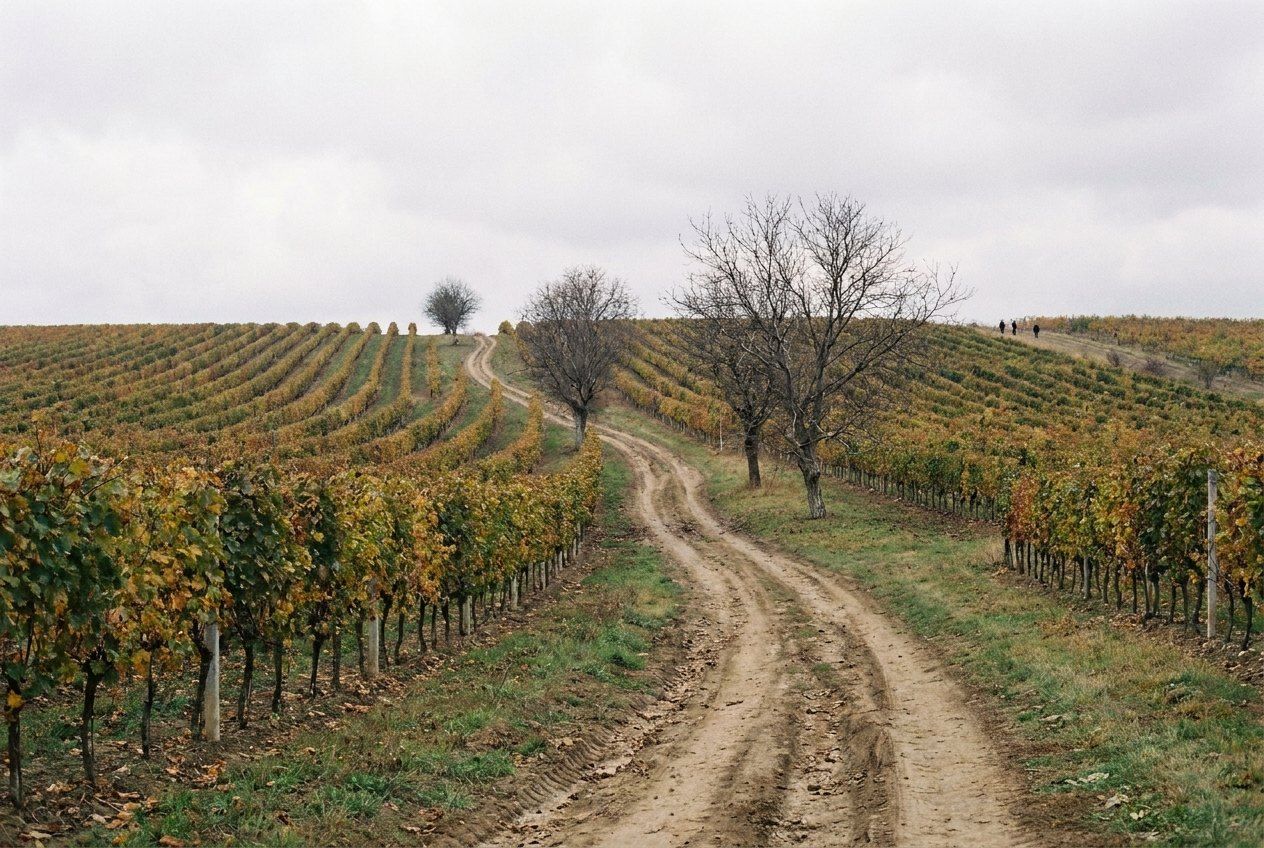
Wine is close to the centre of Moldovan life. The country has one of the highest shares of land under vines anywhere in Europe, and vineyards run along the slopes of almost every district, from the borders with Romania on the Prut to the Dniester in the east. Grapes have been grown here since ancient times, and the medieval principality of Moldavia, which covered this land and the eastern half of present-day Romania, was known for its wine.
In the Soviet period Moldova was one of the main wine and brandy producers of the Union, turning out very large volumes for a vast market. After independence the industry went through hard years, and when exports to its old biggest market were cut off in the 2000s, many producers turned towards Europe and towards quality. Today you find both: large historic producers and small family estates, and in nearly every village, home wine made in the yard.
The three regions
Moldova divides its vineyards into three main wine regions with protected names. Codru covers the centre of the country, a hilly area of oak and beech woods around and north of Chișinău, and it is known for white wines and for the big cellar complexes near the capital. Ștefan Vodă lies in the south-east, towards the Dniester and the border with Ukraine, with warmer, drier slopes that suit red wines. Valul lui Traian lies in the south-west, named after the old earthworks known as Trajan's Wall that cross the region, and it too is mainly red-wine country.
The grapes include familiar international varieties and several local ones. Fetească Albă and Fetească Regală are the main local whites, aromatic and fresh. Fetească Neagră is the best-known local red, and Rară Neagră, called Băbească Neagră across the border in Romania, is a lighter, older red variety. Many producers blend these with the international grapes, and the results vary widely.
A vine-growing area in Romanian is a podgorie, and you may see the word on road signs and labels. A signposted wine route links some of the estates that receive visitors.
The underground galleries
The most unusual sight in Moldovan wine country lies underground. Around the capital, the limestone was quarried for building stone for generations, and the quarries left behind long networks of tunnels. In the Soviet period several of these were turned into wine cellars, with galleries wide enough for cars and lorries, kept at a cool, steady temperature all year.
The largest of these galleries run for many kilometres, with streets named after grape varieties and rows of barrels and bottle niches stretching into the dark. Some hold collections of old vintages running into the hundreds of thousands, or more, of bottles. Visits are usually guided and booked ahead, often by vehicle inside the tunnels, and they end in a tasting room underground. The air is cold even in summer, so take a warm layer.
Further along the arcSoroca fortress and the DniesterVisiting arrangements change from year to year, and some cellars receive only groups or only by appointment. Ask in advance, and check what the visit includes, how long it lasts and whether you can buy wine on site. The same goes for the smaller estates, many of which welcome visitors but prefer to know you are coming.
The national wine festival
Every autumn, on a weekend in early October, Moldova holds its national wine festival, Ziua Națională a Vinului, on the great square in the centre of Chișinău. Producers from across the country set up stalls, there is music and dancing in folk dress, and the square fills with people tasting the year's wines. It marks the end of the grape harvest and the start of the new wine, and it is the easiest way to taste the range of the country in a single afternoon.
The dates are set each year, so check before planning around it. Accommodation in the capital is busier that weekend.
Wine in the village
Beyond the estates, wine in Moldova is a household thing. In late September and October, villages smell of crushed grapes, and many families press their own wine from vines in the yard or a strip of land outside the village. It is stored in cellars dug under the house or into the hillside, often a few steps down from the kitchen, and it is poured for guests in jugs rather than bottles, red or white, usually young and sometimes a little sweet.
If you stay in a village guesthouse, home wine is likely to appear on the table with the food, along with something stronger made from plums or grape pomace. It is fine to accept a small glass and fine to decline. The food that comes with it, from plăcinte to sarmale, is covered in the Romanian and Moldovan table.
Practical notes
Wine country is spread out, and most estates are some distance from the bus routes, so visits are easiest by car, by taxi or on an arranged trip. Whoever drives should not drink at all: drink-driving rules are strict, and the safest assumption is that any alcohol is too much. Spring, when the vines come into leaf, and harvest time are the best seasons to visit the vineyards; the cellars are the same temperature all year.
If you are taking bottles home, check the customs allowances for your route, especially if you are crossing into Romania and the European Union; the practical side of the border is covered in getting around.
The photographs on this page are credited, with their licences, on threads and photographers.